
John is an emeritus professor of medical education at the Hull York Medical School. Until 2010, he was a professor of medical education and undergraduate dean. For most of his career, he was a consultant physician in Leicester. He took an increasing interest in medical education and reorganised the clinical undergraduate course at Leicester Medical School following the publication of the first Tomorrow’s Doctors. He moved to Hull York as the foundation professor of medical education in 2002, responsible to the dean for the delivery of an innovative medical curriculum. He was a practising clinician in Zimbabwe throughout most of the ‘70s.

Dalia Majongwe
Dalia works as a Monitoring and Evaluation Analyst at the Department for Energy Security and Net Zero. Her passion for training in the health sector grew when she worked for Doctors without Borders, researching maternal health and working in HIV/AIDS programmes with other charities in Zimbabwe. Since then, she has served on the committee of Tanzania Link, a project run by the Central and North West London NHS Trust supporting impact evaluations and facilitating M&E train-the-trainer sessions in Tanzania.
She was an M&E Adviser for Health Improvement Zanzibar, where she supported the evaluation of a project establishing a Mental Health validation tool. She has a Master of Public Administration degree from the London School of Economics and Political Science, where her policy paper was presented at the launch of the LSE Global Health Initiative. She supported the work with the Epilepsy Foundation and Ngomahuru using her M&E skills and global health experience.
Chris Dzikiti
Chris was born in Zimbabwe and spent the first 20 years of his life there before migrating to the UK in 1999. Chris joined the Care Quality Commission in October 2022 as Director of Mental Health, following time as a Deputy Director for the National Retention programme at NHS England. Previously, Chris has also worked as a Programme Director leading on mental health transformation in London. Chris is a multiprofessional leader, registered mental health nurse and an experienced programme and project management professional with more than 2 decades of experience working in healthcare transformation, delivery and commissioning.
Between 2017 and 2021, Chris was a Global Healthcare Consultant for Health Education England in India, providing technical support for Mental Health Services there. He is also a published author, having contributed a chapter on psychiatric intensive care to the book Psychiatric and Mental Health Nursing – The Craft of Caring. Chris is passionate about coaching and mentoring colleagues and young people from a Global majority background.
Charles Todd
Charles is the chair. He moved to Zimbabwe in 1982, after completing his training as a GP in London. Over a 20 year period he worked as a government and district medical officer, then lecturer/professor in The University of Zimbabwe Medical School, including a spell as chair of the Department of Community Medicine. From 2000-2004, he was employed by the UK Department for International Development, for most of that time seconded to the European Commission where he supported health programmes. In 2014 he returned to the UK and to general practice, working at a health centre near Aylesbury in Buckinghamshire. He maintains close links with Zimbabwe. He has been a trustee of ZHTS since it was founded in 2006.
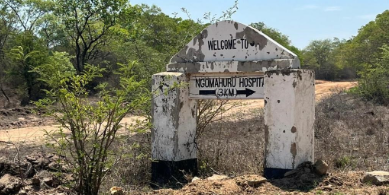
Testimony from Mental Health Workshops at Ngomahuru Hospital
The Business Council for Africa is a not-for-profit organisation connecting Africa to the international business community and investing in Africa’s next generation of business leaders. The pandemic has posed many challenges for the health education field; however, we have pursued taking advantage of openings while paying close attention to public health guidelines to ensure the safety of our patients and staff.
The strength of any education program is its longevity. In line with our sustainability model, we were keen to measure the impact that the project has had in upskilling leadership skills in our Community Champions and Researchers. Here we share some of the testimonies shared by our community staff
Kumbirai, a 20 year-old young woman from Mbare, said:
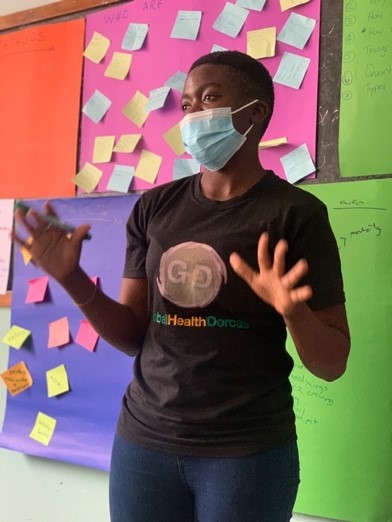
‘The workshop in Ngomahuru mental health hospital helped me get more knowledge on Mental health and l also got some basic skills on how to facilitate workshops which may include mental health patients, it also helped me know how to access information on epilepsy and the safe guarding needs of the patients.
The workshop boosted my confidence even more, as I had to facilitate more workshops on mental health and sexual health, which some of the stakeholders also took part in. The patients were really free and open, which also helped me develop more knowledge.
Working with Doc Chido was one of the best experiences ever in my life, she was really free and open to talk to or for discussion even when I didn’t feel like l could do things she made me believe l was the best in it as working with her l learnt how to facilitate workshops on sexual health and mental health which was a great experience for me and l took notes from her as well which is now an advantage to my skill as l learnt a lot from her also not forgetting the supportive team which was there to back me up whenever I needed a hand and it was a great experience exchanging knowledge between us as young people
Posted by Dorcas Gwata – ZHTS Trustee December 2021
Supporting mental health in Zimbabwe during Covid-19 Crisis
People living with mental illness in Zimbabwe are particularly affected by economic challenges, trauma, domestic violence and disturbing levels of poverty. Their life expectancy is much lower than the wider population. They are also at greater risk of exposure to infectious diseases such as COVID-19.
We are raising money to support three community mental health homes in Zimbabwe that support 50 residents. Most residents are vulnerable. Many are recovering from schizophrenia, bi-polar effective disorder, depression, anxiety, gender violence, epilepsy, HIV, substance misuse and other disabilities.
Many have been discharged from main mental health institutions. They would otherwise be homeless if they did not have support from these community mental health homes.
They have little access to food and clean water. They need to buy meilie meal, rice, vegetables, sugar, beans, salt, cooking oil, masks and soap to ensure good hygiene at this time of COVID-19
We are appealing to you to find it in your hearts to give. Every little helps. Once groceries are bought, we can produce receipts for our donors and evidence that your money has made a real difference. As a Zimbabwean diaspora group, we recognise the value of good governance and public health impact. We seek to support those most in need and those who are most vulnerable.
Thank you for your support.